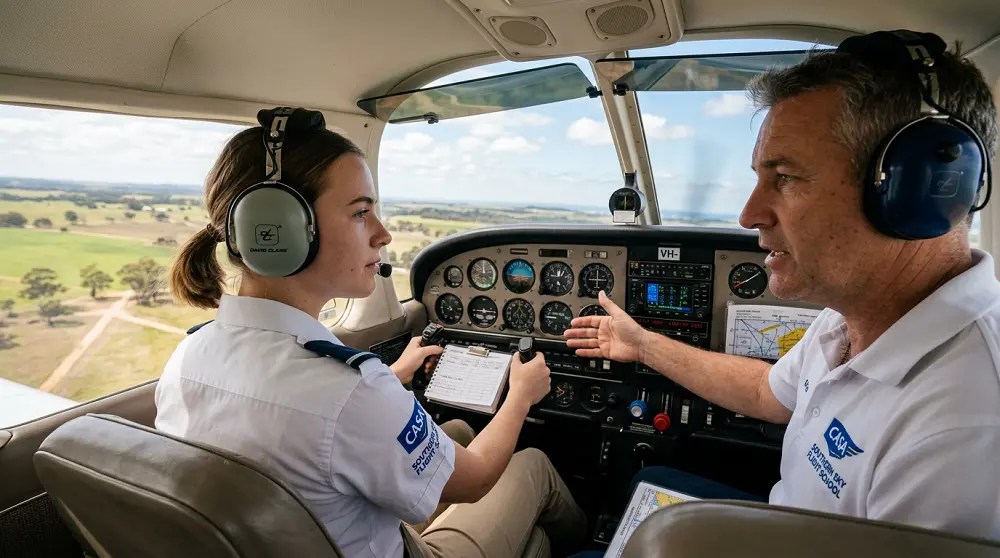
Many people dream of becoming a pilot, but one question often holds them back: How difficult is pilot training? Is it only for people who excel at maths and science? Do you need perfect coordination or years of aviation experience before taking your first lesson?
The good news is that pilot training is challenging, but it is designed to teach complete beginners step by step. Every qualified pilot started without knowing how to fly an aircraft. With the right instructor, consistent practice, and dedication, most students steadily develop the knowledge and skills required to become safe, confident pilots.
In Australia, flight training follows standards set by the Civil Aviation Safety Authority (CASA), ensuring students receive structured instruction that prepares them for real-world flying. Rather than being about natural talent, pilot training is about building knowledge, discipline, and good decision-making over time.
What Makes Pilot Training Challenging?
Pilot training combines practical flying with classroom learning, making it different from many other courses. Students are learning technical skills while also developing confidence and judgement.
Some of the biggest challenges include:
- Learning aviation theory and regulations
- Developing aircraft handling skills
- Communicating clearly over aviation radio
- Understanding weather and flight planning
- Managing multiple tasks at the same time
- Making safe decisions under changing conditions
Initially, this can feel overwhelming. However, every lesson builds on previous knowledge, allowing students to improve gradually rather than mastering everything at once.
What You’ll Learn During Pilot Training
Australian pilot training follows a structured syllabus approved by CASA. Students begin with basic aircraft control before progressing to more advanced flying exercises.
Ground Theory
Ground school covers the knowledge every pilot need before flying independently, including:
- Aerodynamics
- Aircraft systems
- Meteorology
- Navigation
- Aviation law
- Human performance and limitations
- Flight planning
While there is theory to study, it is presented in manageable sections that relate directly to your flight lessons, making it easier to understand and remember.
Practical Flight Training
Flying lessons begin with simple manoeuvres before gradually introducing more complex skills.
Students typically learn:
- Pre-flight inspections
- Taxiing
- Take-offs and landings
- Straight and level flight
- Climbs and descents
- Turns
- Emergency procedures
- Navigation flights
- Solo flying
Every lesson is supervised by a qualified flight instructor until the student demonstrates the required level of competency.
Do You Need to Be Good at Maths?
One of the biggest myths about becoming a pilot is that you must be excellent at mathematics.
In reality, most recreational and private pilots only use basic arithmetic during flight planning, fuel calculations, navigation, and weight and balance calculations. Modern flight training teaches these calculations step by step, and many are supported by approved flight planning tools.
Problem-solving, attention to detail, and following procedures are generally more important than advanced mathematics.
Is the Theory Hard?
Some students find theory more difficult than flying, while others experience the opposite.
Subjects such as meteorology, navigation, and aviation regulations require study and revision. However, students who attend ground school regularly, ask questions, and review material consistently usually perform well.
Instead of trying to memorise everything at once, successful students focus on understanding how each topic applies during actual flights.
What Skills Help You Succeed?
Pilot training is less about natural ability and more about developing the right habits.
Successful students often demonstrate:
- A positive attitude
- Willingness to learn
- Consistency in training
- Good communication
- Strong situational awareness
- Patience with themselves
- Commitment to safety
Every pilot makes mistakes during training. Learning from those mistakes is a normal part of becoming a safe aviator.
Does Everyone Learn at the Same Speed?
No.
Every student progresses differently depending on factors such as:
- Previous aviation exposure
- Training frequency
- Study habits
- Confidence
- Weather conditions
- Individual learning style
Some students reach milestones quickly, while others need additional practice before moving forward. This is completely normal.
CASA training standards focus on competency rather than speed, meaning students progress once they demonstrate safe and consistent performance rather than simply completing a certain number of lessons.
How Can You Make Pilot Training Easier?
There are several ways to improve your learning experience:
Train Regularly
Flying every week helps reinforce skills and reduces the need to revisit previous lessons.
Prepare Before Each Lesson
Reviewing the lesson objectives beforehand allows you to spend more time practising in the aircraft.
Ask Questions
Experienced instructors expect students to ask questions. Clarifying concepts early prevents confusion later.
Stay Consistent
Small, regular study sessions are far more effective than trying to learn everything just before exams or flight tests.
Choose the Right Flight School
A supportive learning environment, structured syllabus, and experienced instructors can significantly reduce stress and improve confidence throughout your training.
Australian Pilot Training Requirements
In Australia, pilot licences are issued under the regulations administered by the Civil Aviation Safety Authority (CASA).
Depending on your goals, you may begin with a Recreational Pilot Licence (RPL) or work towards a Private Pilot Licence (PPL). Students must also meet medical requirements appropriate to their licence, complete the required theory and flight training, and successfully pass practical flight tests conducted to CASA standards.
These nationally recognised standards ensure every licensed pilot has demonstrated the knowledge, flying skills, and judgement required to operate safely.
Begin Your Flying Journey with Confidence
If you’re still wondering how difficult pilot training is, the answer is simple: it requires commitment, consistency, and the right guidance, but it is absolutely achievable for motivated beginners.
At Goldwings Aviation Australia, students receive personalised instruction, structured lesson plans, and real-world flight training at Moorabbin Airport, one of Australia’s busiest general aviation airports. Whether you’re pursuing recreational flying or planning a future aviation career, learning alongside experienced instructors can make the journey both rewarding and enjoyable.
If you’re ready to take the first step, choose the trusted Melbourne Flight Training School at Moorabbin Airport and discover how professional instruction can help you achieve your aviation goals.
If you’re also planning your budget, our guide to pilot training cost explains the typical expenses involved in becoming a pilot.
Conclusion
Pilot training is challenging because flying an aircraft is a serious responsibility. However, it is not designed to be impossible. With structured instruction, regular practice, and a willingness to learn, thousands of Australians successfully earn their pilot licences every year.
The key is choosing a quality flight school, staying committed to your training, and remembering that every experienced pilot once sat in the cockpit for their very first lesson.


Leave a Reply